When the Fool Became the Star of the Show
Trace how comic figures moved from supporting roles to leading characters, and see how the clown, trickster and bungler each generate a different story.
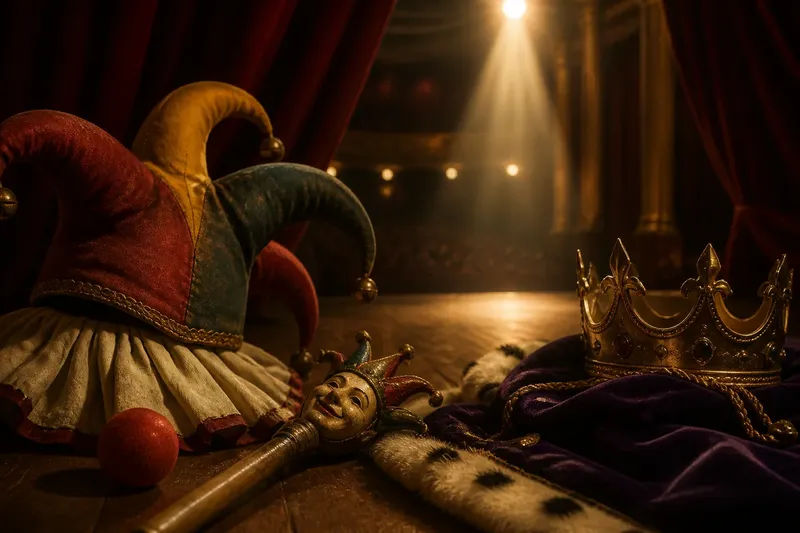
A clown can puncture a king’s grand speech and still leave the king with the plot. The history of the comic protagonist is not a single march from the margins to centre stage; it is a set of different theatrical and narrative arrangements that let comic figures drive the action themselves.
What changes when the fool takes centre stage?
In ensemble comedy, the fool often acts as a pressure valve. A pompous ruler, a quarrelling household or a tightly wound group supplies the main business; the comic figure exposes its absurdity. The fool may deliver the sharpest line, while the story remains focused on other people’s plans.
When the fool becomes the protagonist, the audience follows that character’s wants, choices and consequences. Their misunderstanding, appetite, vanity or stubborn scheme starts the plot and keeps it moving. This is a change in dramatic responsibility, not simply screen time.
A lead needs a desire that produces action, plus enough vulnerability or persistence to make the audience care what happens next. A character can appear in every scene and still remain a supporting presence if other people’s decisions shape the story’s major turns.
Which historical traditions show the shift?
There is no single point at which a supporting clown became a leading character. Different forms gave comic figures different kinds of agency. Shakespeare’s plays, for example, place professional fools and clowns in varied relationships to the main action: Feste in Twelfth Night comments on the people around him, while Bottom in A Midsummer Night’s Dream becomes central to a comic subplot through his transformation and theatrical ambition. These are distinct roles, not stages in one universal progression.
Italian commedia dell’arte offers another useful comparison. Its recurring character types, including the servants known as zanni, could drive scenes through schemes, disguises and reversals. The balance between performer, role and plot varied across performances, so it is more accurate to treat this as one influential performance tradition than as a direct bridge to every later comic protagonist.
In nineteenth-century stage melodrama and popular theatre, comic characters often appeared alongside serious plots, providing relief or a contrasting strand of action. Later screen comedy could devote sustained narrative attention to a comic lead, but the historical routes differed by country, medium and genre. The broader pattern is best understood as a selective interpretation: in some works, the fool moves from commenting on events to causing them.
For a writer, the distinction is useful: ask whether the character merely interrupts the story or changes what happens next.
Which kind of comic lead suits a story?
These three approaches are broad creative patterns, not historical boxes. A play, film or series can combine them. Each offers a different reason for putting a comic figure at the centre.
Does the social outsider lead suit your story?
This character stands beyond the group’s rules: a servant among masters, a newcomer among insiders, or a powerless figure facing an institution. Their comic freedom comes from noticing what polite company ignores. Use this shape when the pleasure lies in watching social rank, official language or collective self-importance wobble.
The risk is that the outsider becomes only a commentator. Give them a personal aim—a place to belong, a task to finish or a promise to keep—so their choices turn observation into plot.
Will a trickster make the strongest protagonist?
The trickster changes the situation through disguise, deception or quick invention, then has to face the consequences. This lead suits schemes and reversals, especially when cleverness creates as much trouble as it solves.
Say you are writing an invented office comedy about an junior employee who wants to avoid presenting an unfinished proposal. They falsely claim a senior colleague approved it; when the meeting is scheduled, they persuade the colleague to attend, then must explain why the proposal is still incomplete. The observable result is a new complication caused by the lead’s own tactic, giving the next scene a clear source of conflict.
Could a lovable bungler carry the whole plot?
A bungler’s defining trait is a mismatch between intention and effect. They may be earnest, proud or anxious, and the audience can sympathise with the effort even as each attempt makes matters worse.
A string of accidents is not enough. Give the character a goal and let a recognisable limitation shape how they pursue it. If they do not learn, let relationships or circumstances change so that the story still registers consequences.
What questions help you shape a comic protagonist?
How do you tell whether a fool is truly the protagonist?
Trace who causes the major turns, not who gets the biggest laugh. If removing the fool leaves the chain of events largely intact, the character may still be supporting the story.
Can a comic lead remain foolish and still change?
Yes. The character can keep the same comic weakness while gaining trust, losing status or learning to rely on someone else. Change can happen around the flaw rather than erase it.
What should the supporting cast do?
Give the lead resistance, affection, authority and witnesses. A rival may spot a danger the fool misses, while a straight-faced official can make the fool’s behaviour appear still more absurd.
Why does the ensemble still matter?
A starring fool does not make the rest of the cast redundant. Supporting characters reveal different sides of the lead: helpless before a clerk, unexpectedly generous with a child, or insufferably confident around a friend. They also carry parts of the story the protagonist cannot manage alone.
The lead remains central because the plot’s main turns grow from their aims and actions, not because every scene belongs to them. That distinction helps writers assess whether a comic figure has become the engine of a story rather than its brightest interruption.
When choosing a comic protagonist, look for a comic habit that can generate fresh action and meaningful consequences. The clown who exposes a group, the trickster who rearranges it and the bungler who collides with its demands offer different kinds of momentum; the right choice depends on whose choices you want the audience to follow.